
Water Tank Installation in Whangarei and Northland
Concrete and poly water tanks from Duracrete, McKee Plastics and Baileys, supplied and installed with pad preparation, downpipe connections and the connection through to your house.
 021 0236 9667
- Certifying drainlayer
- Certified Hynds and Duracrete installer
- Free quotes in Whangarei
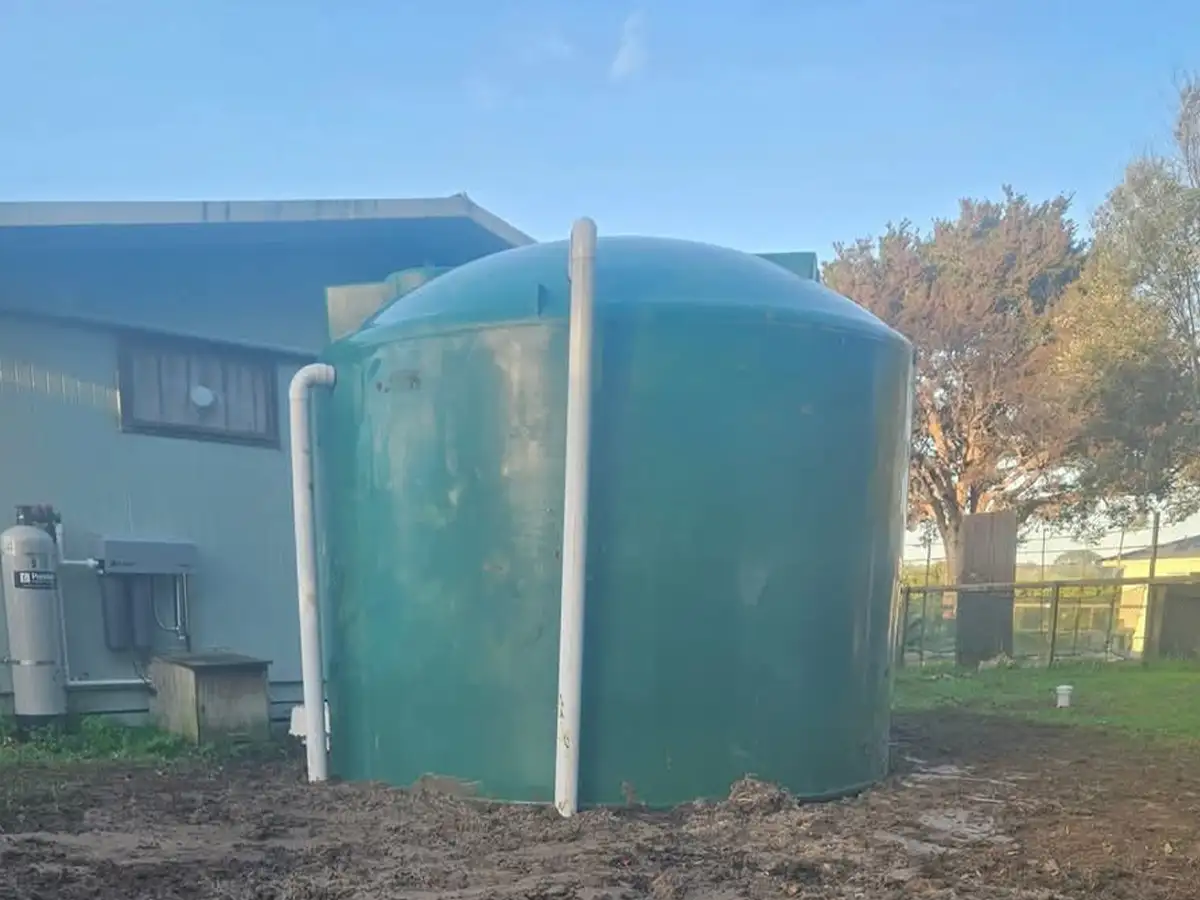
Water tanks installed from the pad to the tap
For many rural Northland homes, the water tank is the only water supply, so it needs to be the right size, sitting on solid ground and properly connected. We supply and install concrete and poly tanks and look after the whole job. That includes preparing the pad, placing the tank, connecting the downpipes and organising the water supply connection to the house.
We install water tanks for
- New homes on rural sections and lifestyle blocks
- Replacing an old, cracked or leaking tank
- Adding storage for a bigger household, a sleepout or dry summers
- Baches and holiday homes
What’s included
A water tank is only as good as what’s underneath it and how it’s connected. A tank sitting on uneven or soft ground can crack or lean, and poorly run pipes can leak or lose pressure. We take care of each part of the job so it’s done properly. The water supply pipework is done by a licensed plumber, and we can arrange one or work with your own:
Most tank systems also need a pump to get water to the house, and we quote this separately so you can see exactly what it costs. Our pumps page covers the options if you need a new one. Pumps →
- Site preparation and a level, compacted pad
- Tank supply and placement
- Connection from the roof downpipes to the tank
- The water supply connection from the tank to the house, done by a licensed plumber
- An overflow run to a safe discharge point, included on every job
Concrete or poly?
Both types do a good job when they’re installed properly, and the right choice usually comes down to your site and access. Here’s how they compare:
| Concrete | Poly | |
|---|---|---|
| Brands | Duracrete | McKee Plastics, Baileys |
| Weight | Heavy and very stable | Light and easy to move into place |
| Access | Needs truck and crane access | Suits sites with tricky access |
| Placement | Can be buried or partly buried on some sites | Sits on a prepared pad above ground |
Duracrete is based in Whangarei, and it says concrete keeps stored water cooler and doesn’t need anchoring in high-wind areas. Poly tanks are much lighter, so they’re easier to get onto steep or remote sites where a crane truck can’t reach. We can talk you through which suits your property when we look at the site.
What size tank do you need?
The right size depends on how many people live in the house, your roof area, local rainfall and whether the tank is your only water source. A household relying on tank water through a dry Northland summer needs more storage than a home with a backup supply. For a typical house, we usually install two or three 25,000 litre tanks. We can help you work out a sensible size for your household, and the manufacturers also have sizing guides.
Does a water tank need a building consent?
Many water tanks don’t need a building consent. Under Schedule 1 of the Building Act, a tank of up to 35,000 litres sitting directly on the ground is exempt, and smaller tanks can be raised off the ground within set height limits. Tanks still need to meet your district plan rules, such as how close they can be to the boundary, so check with your council if you’re unsure. We can help you position the tank to suit.
What affects the price
Every site is different, so we quote each job individually. The main things that affect the price are:
- 01 Tank type and size concrete or poly, and how much storage you need
- 02 Access how close the delivery truck can get
- 03 Pad preparation ground conditions and how much levelling is needed
- 04 Distance to the house the length of the pipe run to the house
- 05 Location travel time for sites further from Whangarei
Quotes are free in Whangarei and the surrounding area. We’ll check access, the ground and the pipe run before we quote, so there are no surprises on the day. Your quote will set out exactly what’s included.
How the job works
-
1Get in touch Call us, or send the form below with a few photos of where the tank will go.
-
2Site visit and quote We check access, ground conditions and the pipe run, then quote the job.
-
3Tank ordered The tank is ordered from the manufacturer to suit your site.
-
4Pad prepared We level and compact the pad ready for delivery.
-
5Tank placed and connected The tank is delivered and placed, then connected to the downpipes, and the water supply to the house is connected by a licensed plumber.
-
6Tested The connections are checked for leaks and the system is ready to use.
Looking after your water tank
A water tank needs very little attention, but a few simple checks keep your water clean. Keep gutters and leaf guards clear, and check the first-flush diverter if you have one. Have the tank cleaned every few years, or as the manufacturer recommends, to remove sediment that builds up on the bottom.
If the tank supplies your drinking water, have the water tested regularly. Testing picks up problems you can’t see or taste. Filters and UV treatment are common options for rural homes on tank water, and we can install both as part of your tank system.
Why choose Drainspec
Water tank FAQs
Can’t see your question? Call us on 021 0236 9667.
Both work well, and the right choice usually depends on your site. Concrete tanks are heavy, strong and can be partly buried, but they need good access for a crane truck. Poly tanks are lighter and easier to get onto steep or remote sites.
Yes. We prepare a level, compacted pad before the tank arrives, which is essential for the tank to sit properly and last. We’ll check the ground conditions when we visit and include the pad work in your quote.
Yes. We connect the tank to your roof downpipes and run the overflow to a safe discharge point. The water supply pipework to the house is sanitary plumbing, so it’s done by a licensed plumber. We can arrange one as part of the job, or work with your own plumber if you already have one.
Yes. We replace old, cracked and leaking tanks with new concrete or poly tanks, and check the pad and connections at the same time. We remove and dispose of the old tank, and if the old pad isn’t up to standard, we’ll redo it before the new tank goes in.
Get a free quote
Tell us about your property and what you need, whether it’s a new tank, a replacement or extra storage. A few photos of where the tank will go help us quote more accurately.
We reply to every enquiry within one working day.
