
Stormwater Drainage in Whangarei and Northland

Stormwater pipes, soak pits and swales for new builds and existing homes, installed by a certifying drainlayer to carry roof and surface water safely away from your house.

  • Certifying drainlayer
  • Certified Hynds and Duracrete installer
  • Free quotes in Whangarei
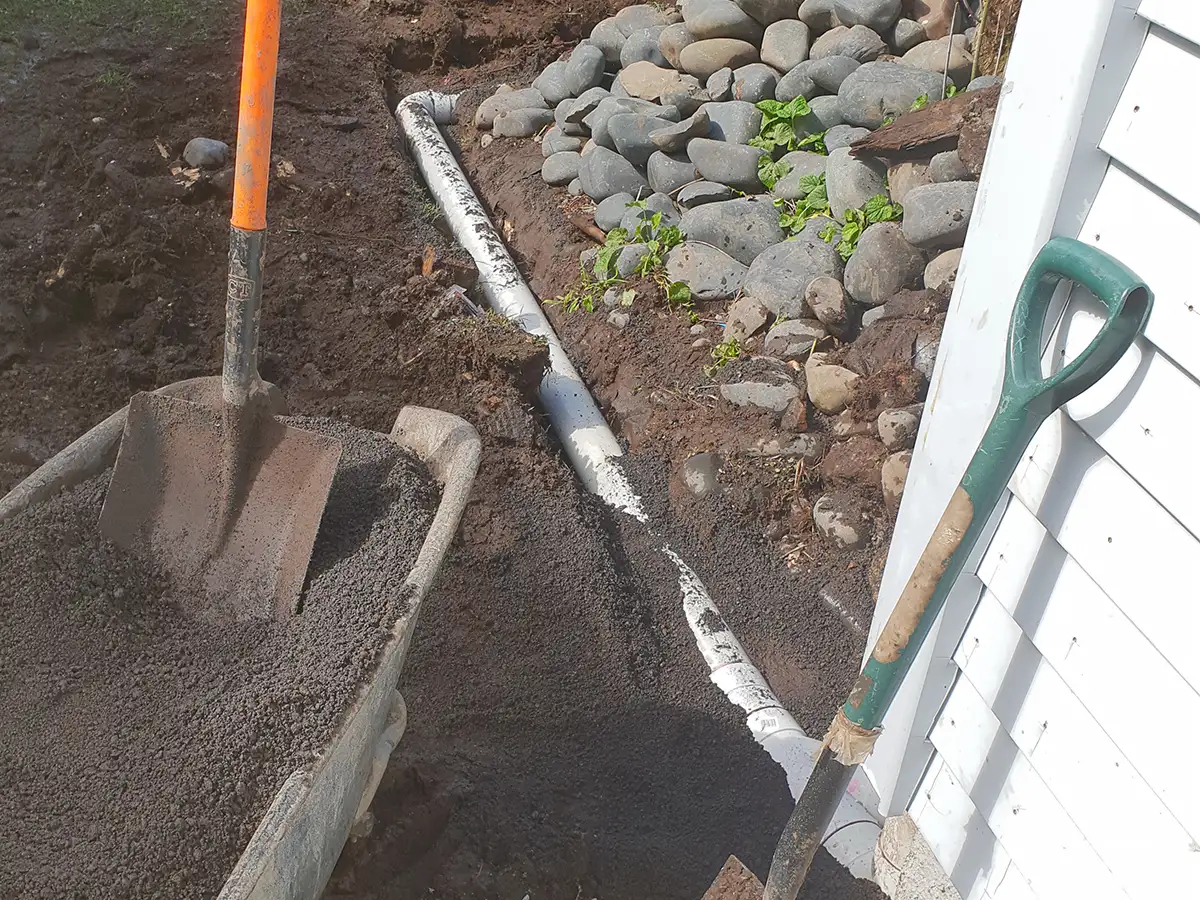
New PVC drain pipe being laid and bedded in a trench beside a house in Whangarei, with a wheelbarrow of bedding metal
Roof to outlet Downpipes, pipes and soak pits sorted

Keeping water away from your home

Northland gets heavy downpours, and much of the region sits on clay soils that don’t soak up water quickly. On a sloping section, that water can end up pooling on the lawn, running across the driveway or finding its way under the house. Over time it can cause damp, damage foundations and wash out gardens and paths.

A properly designed stormwater system collects roof and surface water and takes it somewhere safe.

We install stormwater systems for

  • New builds that need a stormwater system as part of the building consent
  • Water ponding on lawns, paths or driveways after rain
  • Water running towards the house, collecting underneath it or pouring from downpipes onto the ground
  • Old stormwater pipes that are cracked, blocked or too small

Stormwater solutions

The right approach depends on your site, your soil and where the water can legally go. Most jobs use one or more of these, and we’ll recommend the simplest option that works for your site.

Stormwater pipes

Downpipes are connected to underground pipes that carry roof water to an approved discharge point, such as the council stormwater network or an on-site soakage system. This is the most common fix for downpipes that empty onto the ground, and it stops water soaking the ground around your foundations. Where the pipes join the council's public mains, the council requires its own contractor to make that connection, and we lay the pipework on your side up to that point.

Soak pits

Where there's no council stormwater connection, a soak pit lets water soak into the ground on your property. Whangarei District Council requires soak pit designs to be backed by a geotechnical investigation confirming the soil is suitable, so an engineer assesses the site first. Soak pits can't be used in areas with a moderate or high land stability hazard. Once the design is done, we install the soak pit to the engineer's specifications.

Swales

A swale is a shallow, grassed channel that slows surface water down and directs it where you want it to go. Swales work well on larger sections and along driveways, and they blend into the landscape. They need little upkeep beyond mowing.

Subsoil drainage

Where the problem is groundwater rather than surface water, subsoil drainage collects the water sitting below the surface and carries it away. It's the usual fix for ground that never seems to dry out, and it can connect into the same stormwater system. Our subsoil drainage page has more detail.

Subsoil drainage

Water tanks

Collecting roof water in a tank is often the first option on rural properties, and Whangarei District Council's standards encourage reusing stormwater where possible. The tank's overflow still needs to go somewhere safe, which we can include in the job.

Water tanks

Rain gardens and detention tanks

Some sites need stormwater slowed down or cleaned before it leaves the property, especially where the council network is already under pressure. A rain garden is a planted area with specially layered soil that soaks up and filters runoff, while a detention tank holds stormwater and releases it slowly. We install both where your design or consent calls for them.

Council rules for stormwater

The Building Code, in clause E1 Surface Water, requires homes to be protected from surface water, with drainage that carries it away and stops it getting into the building. Where that water can go is set by your district council, and Far North and Kaipara district councils have their own requirements. We can talk you through what applies to your property.

In Whangarei, the council’s Stormwater Management Bylaw sets out the key rules:

Work must be done by a licensed drainlayer Work on private stormwater systems has to be carried out by a drainlayer licensed under the Plumbers, Gasfitters and Drainlayers Act. Our work is carried out and certified by a certifying drainlayer.
Connections need council approval You need Whangarei District Council's written approval before connecting to the public stormwater system.
The boundary is the dividing line You're responsible for the stormwater system on your property, and the council is responsible from the point of discharge, usually at or near your boundary.
Don't send water onto neighbours Stormwater can't be directed across the surface onto a neighbouring property, apart from natural runoff and designated overland flow paths.
Keep overland flow paths clear Buildings, fences and retaining walls can't block an overland flow path without council permission.
No contaminants Sewage, chemicals and other contaminants must never go into the stormwater system.

What affects the price

Every site is different, so we quote each job individually. The main things that affect the price are:

  1. 01 Length and depth of the pipe runs longer runs mean more digging and more pipe
  2. 02 Number of downpipes each one needs connecting
  3. 03 Soak pit size based on the engineer's design and how well your soil drains
  4. 04 Access whether a digger can get in easily
  5. 05 Ground conditions clay, rock and existing services all affect the work
  6. 06 Location travel time for sites further from Whangarei

Quotes are free in Whangarei and the surrounding area, and a drainage report is available for remote Northland sites at $499 + GST. Either way, you’ll know what the job involves before you commit.

How the job works

  1. 1
    Get in touch Call us, or send the form below with photos or a short video of the problem, ideally taken during heavy rain.
  2. 2
    Site visit We look at where the water is coming from and where it can go.
  3. 3
    Quote You get a clear quote, including any engineer's input or council approvals the job needs.
  4. 4
    Consent and approvals New stormwater systems are usually part of your building consent, and connections to the council network need council approval.
  5. 5
    Installation We install the pipes, soak pit or swale to the approved design.
  6. 6
    Sign-off Council inspects consented work before sign-off.

Looking after your stormwater system

Most stormwater problems start with blockages. Keep gutters, downpipes and sumps clear of leaves and debris, especially before winter. After heavy rain, check that soak pits and swales are draining and that water isn’t pooling where it used to.

If ponding comes back, or water starts appearing under the house again, get it checked early. A blocked or undersized pipe is much easier to fix before it causes damage. We can run a camera through the pipes to find the cause.

Why choose Drainspec

Licensed for the work Our certifying drainlayer is licensed for private stormwater work, as the council bylaw requires, and has over 25 years in the trade.
Local knowledge We know Northland's clay soils, slopes and council requirements.
Workmanship promise If there's ever a problem with our work, we'll come back and fix it.

Stormwater FAQs

Can’t see your question? Call us on 021 0236 9667.

It depends on your property. In town, stormwater usually goes to the council network, with council approval. On rural sections or where there’s no council connection, it’s often managed on site, through water tanks, soak pits or swales.

No. Whangarei District Council’s bylaw doesn’t allow stormwater to be directed across the surface onto a neighbouring property, apart from natural runoff and designated overland flow paths. If water from your section is causing problems next door, a stormwater system can fix it.

Get a free quote

Tell us about the problem or what your new build needs. Photos or a short video taken during heavy rain are the most useful thing you can send, because they show exactly where the water goes.

We reply to every enquiry within one working day.

Prefer to talk? Call us on 021 0236 9667 ben@drainspec.co.nz
Back to top