Subsoil Drainage in Whangarei and Northland

Novacoil and French drains for wet lawns, retaining walls and foundations, installed by a certifying drainlayer.

  • Certifying drainlayer
  • Certified Hynds and Duracrete installer
  • Free quotes in Whangarei
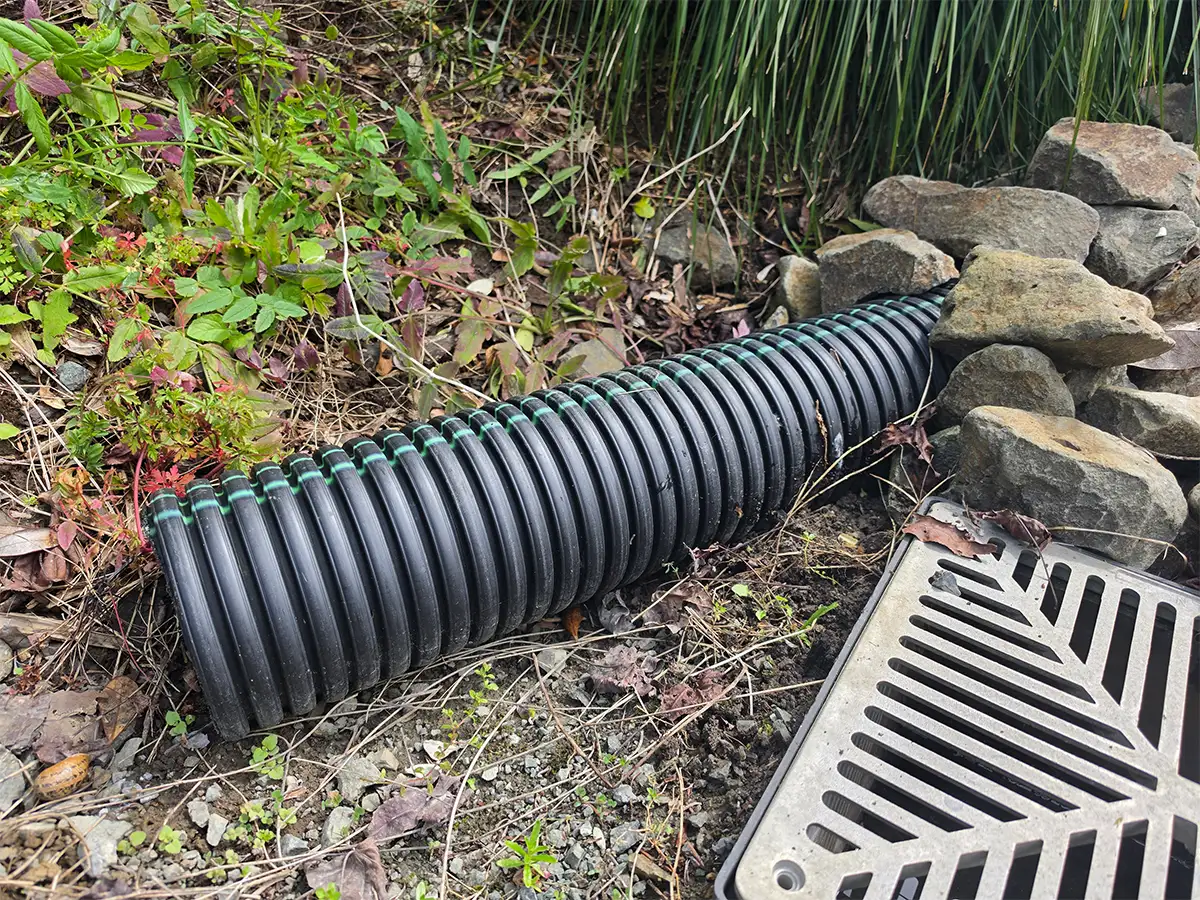
Black corrugated subsoil drainage pipe laid beside a garden bed and drainage grate
Clay soils Drainage built for Northland ground

Signs you need subsoil drainage

Some drainage problems are easy to see, like water running off the roof. Others sit just below the surface, where groundwater builds up with nowhere to go.

Much of Northland sits on clay that drains slowly, so water soaks into the topsoil and then has nowhere to go. Subsoil drainage is often the fix for all of these problems. We install subsoil drains across Northland for homes, baches and lifestyle blocks.

You might notice

  • A lawn that stays soggy for days after rain
  • Water seeping through or pooling behind a retaining wall
  • Damp ground or standing water under the house
  • Moss, rushes or boggy patches in the garden
  • Water coming out of a bank or slope

How subsoil drainage works

A subsoil drain is a trench with a perforated pipe, usually Novacoil, laid in the bottom and surrounded by drainage metal. Groundwater seeps into the metal, into the pipe and is carried away to a safe discharge point. We use Novacoil with a filter sock as standard, which stops fine soil and silt getting into the pipe and blocking it. Once the trench is backfilled, the drain sits out of sight and keeps working after every downpour.

Subsoil drainage deals with water in the ground, while stormwater drainage deals with water on the surface and from the roof. Many properties need both, and they often connect into the same system. Our stormwater page explains the surface water side. Stormwater drainage →

Where subsoil drainage is used

Wet lawns and sections

A French drain, or a series of subsoil lines across the lawn, collects the water that sits below the grass. It's one of the simplest ways to turn a boggy section into one you can use all year. The layout depends on the slope and where the water is coming from.

Behind retaining walls

Water building up behind a retaining wall puts pressure on it and can seep through or cause it to lean. A subsoil drain at the base of the wall relieves that pressure and carries the water away. Drainage can often be added behind an existing wall, including walls built by someone else, and walls against the house are covered on our basement waterproofing page.

Basement waterproofing

Around foundations

A perimeter drain around the house keeps groundwater away from the foundations and the ground underneath. This helps with damp subfloors and water collecting under the house. It's often combined with stormwater work to deal with roof water at the same time.

Slopes and banks

On sloping sections, a subsoil drain across the slope can catch water before it reaches the house, driveway or lawn below. This is common on Northland hillside sections, where water moves through the soil after heavy rain. On new builds, earthworks can also change how water moves, and the problem often shows up in the first wet season.

Where the water goes

Every subsoil drain needs a proper outlet. Depending on your property, that might be the council stormwater system, a soak pit or another approved discharge point. In Whangarei, work on private stormwater systems has to be done by a licensed drainlayer, and water can’t be directed onto a neighbour’s property.

A small retaining wall, holding back no more than 1.5 metres of ground and with no extra load above it, doesn’t need a building consent as long as it includes groundwater drainage. For other subsoil drainage work, we can tell you whether your job needs a consent. If it does, we’ll factor that into the quote and timing.

What affects the price

Every site is different, so we quote each job individually. The main things that affect the price are:

  1. 01 Length and depth of the trenches more trench means more digging, pipe and metal
  2. 02 Access whether a digger can get in, or the work needs a smaller machine or hand digging
  3. 03 Ground conditions clay, rock and existing services all affect the work
  4. 04 Distance to the outlet how far the water needs to be carried
  5. 05 Reinstatement putting lawns, paths or gardens back afterwards, which we can include in the quote
  6. 06 Location travel time for sites further from Whangarei

Quotes are free in Whangarei and the surrounding area. We’ll look at where the water is coming from before we quote, so the fix matches the problem. Your quote will set out exactly what’s included.

How the job works

  1. 1
    Get in touch Call us, or send the form below with photos, ideally taken after heavy rain.
  2. 2
    Site visit We look at where the water is coming from and where it can go.
  3. 3
    Quote You get a clear quote for the drain layout and outlet.
  4. 4
    Installation The trench is dug, the pipe and drainage metal are laid, and the drain is connected to the outlet.
  5. 5
    Backfill and reinstatement The trench is backfilled, and lawns, paths or gardens are put back if that's part of the job.

Looking after your subsoil drains

Subsoil drains need very little attention once they’re in. Keep the outlet clear of leaves, soil and debris so the water can get out. If wet patches start coming back, the drain may be blocked or damaged, and a camera inspection can find the problem without digging. Drain camera inspections →

Why choose Drainspec

One team from start to finish We look at the problem, quote the job and do the work.
Experienced and certified Our certifying drainlayer has over 25 years in the trade, and Drainspec is a certified Hynds and Duracrete installer.
Local knowledge We know Northland's clay soils and sloping sites.
Workmanship promise If there's ever a problem with our work, we'll come back and fix it.

Subsoil drainage FAQs

Can’t see your question? Call us on 021 0236 9667.

It’s usually groundwater sitting on clay soil, water running off a slope above, or both. Downpipes emptying onto the ground can make it worse. A subsoil drain collects the water below the surface and carries it away, and we can check whether stormwater is part of the problem too.

A French drain is the trench itself, filled with drainage metal to collect water. Novacoil is the perforated pipe laid in the bottom of the trench to carry that water away. Most subsoil drains use both together.

Almost every retaining wall benefits from drainage, because water building up behind it adds pressure. For small walls, groundwater drainage is also one of the conditions for not needing a building consent. If an existing wall is seeping, a drain at the base can often help, even if we didn’t build the wall. A wall that’s leaning should be checked by an engineer first.

Get a free quote

Tell us where the water is and what you’ve noticed. Photos taken during or after heavy rain are the most useful thing you can send, because they show where the water sits.

We reply to every enquiry within one working day.

Prefer to talk? Call us on 021 0236 9667 ben@drainspec.co.nz
Back to top