
Concrete Septic Tanks in Whangarei and Northland
Dual chamber concrete septic tanks from Duracrete and Wade, supplied and installed by a certifying drainlayer.
 021 0236 9667
- Certifying drainlayer
- Certified Hynds and Duracrete installer
- Free quotes in Whangarei
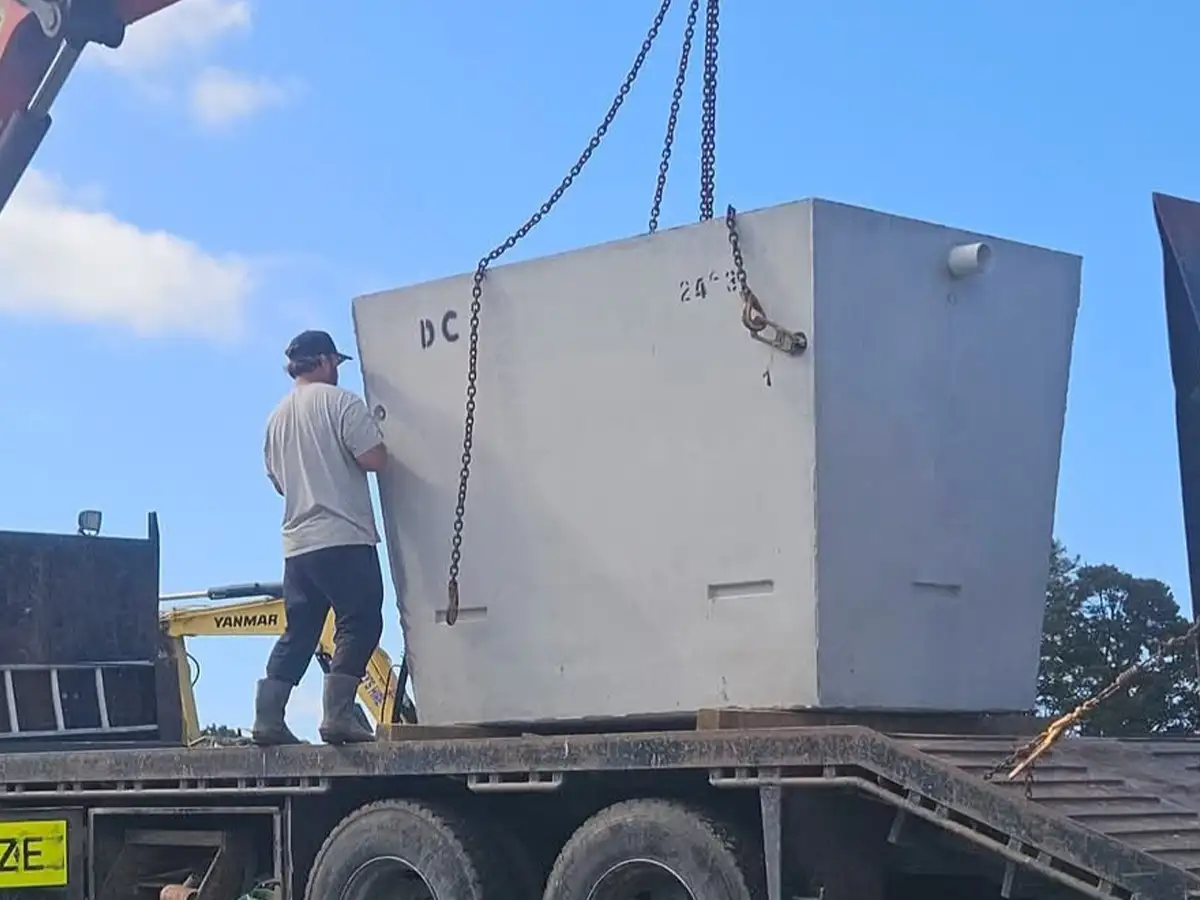
Concrete septic tanks from Northland suppliers
A concrete septic tank is the traditional choice for rural homes, and on the right site it’s still one of the simplest and most dependable systems you can install. We supply and install dual chamber concrete tanks from Duracrete, based in Whangarei, and Wade Concrete, made in Dargaville. Both are local companies that know Northland conditions. The tank we install most often is Wade’s 4,500 litre tank, which comes in single or double chamber versions and includes an outlet filter as standard. We can also install a Hynds concrete tank where your plans specify one. If your site needs secondary treatment instead, Duracrete’s CleanStream TXR is the system we install most.
A concrete tank is a good fit for
- New homes on larger rural sections with good soil
- Replacing an old single chamber tank or one that's failing
- Sites where the wastewater design calls for a standard septic system
- Wet ground, where a heavy tank is less likely to shift
How a dual chamber tank works
Wastewater from the house flows into the first chamber, where most of the solids settle to the bottom and fats float to the top. Natural bacteria break down the settled sludge over time. The partly clarified liquid then passes into the second chamber, where finer solids settle out.
Before the liquid leaves the tank, it passes through an outlet filter that catches small particles. The Regional Plan for Northland requires septic tanks to have a filter that retains solids larger than 3.5 millimetres. Less solid material reaching the disposal field means the field is less likely to clog, which helps it last longer.
The benefits of concrete
Concrete tanks are strong, and their weight helps keep them in place in wet ground or where the water table is high. Duracrete and Wade are both Northland companies, and a well-installed concrete tank should give many years of service. Both suppliers offer trafficable lids for tanks where vehicles might drive over them, and Wade also offers anti-flotation feet for sites with a high water table.
The main trade-off is access. A concrete tank is delivered by truck and lifted into place, so the site needs room for the truck to get close to where the tank is going. We’ll check access when we look at the site and let you know if it affects the job.
Does a concrete septic tank suit your site?
A standard septic tank provides primary treatment, and the Regional Plan for Northland sets conditions for where it can be used without a resource consent.
Your wastewater engineer will check these against your site. If your section can’t meet them, because it’s small, steep or close to water, the engineer is likely to specify a secondary treatment system instead. If you already have a design, it will say which system your site needs. Secondary treatment systems →
The disposal field generally needs to be
- At least 20 metres from streams, wetlands, the coast and existing water bores
- At least 1.5 metres from your property boundary
- At least 1.2 metres above the winter groundwater table
- Backed by a reserve disposal area the same size as the main one
What affects the price
Every site is different, so we quote each job individually. The main things that affect the price are:
- 01 Tank size based on the number of bedrooms and people in the house
- 02 Delivery and access how close the truck can get to where the tank is going
- 03 Disposal field the size and type your design calls for
- 04 Ground conditions clay, rock and water all add to the digging
- 05 Old tank whether an existing tank needs removing or decommissioning
- 06 Location travel time for sites further from Whangarei
Quotes are free in Whangarei and the surrounding area. For remote Northland sites, we offer a drainage report for $499 + GST, which gives you a clear picture of what’s needed before any work starts. Either way, you’ll know what the job involves before you commit.
From design to sign-off
-
1Get in touch Call us, or send the form below with photos of the site and your plans if you have them.
-
2Site design A wastewater engineer assesses the site and designs the system, if that hasn't already been done.
-
3Quote We quote the job based on the approved design.
-
4Consent The design goes to your district council for building consent.
-
5Installation The tank is delivered and lifted into place, then we connect the pipework and install the disposal field.
-
6Sign-off Council inspects the work and we provide the certification needed for sign-off.
Looking after your septic tank
A concrete septic tank needs very little day-to-day attention, but it does need regular pump-outs and filter cleaning. Wade recommends emptying its tanks every three years and checking and cleaning the outlet filter every six months, although your septic servicing company may suggest a different timeframe based on the number of people in the house. In Kaipara, the district council’s bylaw requires septic tanks to be pumped out every three years. Drainspec doesn’t offer servicing, so you’ll need to book this with a septic servicing company.
Between pump-outs, only flush toilet paper and go easy on bleach and harsh cleaners, which kill the bacteria the tank relies on. Spread washing loads through the week, and keep vehicles off the disposal field. If you notice slow drains, smells or wet patches over the disposal field, get it checked early.
Why choose Drainspec
Concrete septic tank FAQs
Can’t see your question? Call us on 021 0236 9667.
Both can do the job when they’re installed properly. Concrete tanks are heavy and strong, which helps them stay put in wet ground, while plastic tanks are lighter and easier to get onto sites with difficult access. Your wastewater design and site access will usually point to the right choice.
Your wastewater engineer works out the size based on the number of bedrooms and the expected number of people in the house. It’s worth allowing for future growth, such as adding a bedroom later. We supply tanks to match the size your design specifies.
Yes. We replace old single chamber and failing tanks with modern dual chamber concrete tanks. A replacement usually needs a new design and building consent, and the disposal field may also need upgrading.
That’s up to you. We can remove the old tank completely, or decommission it and fill it in place, depending on your preference and what suits the site. Either way, it’s dealt with properly so it doesn’t cause problems later, and your quote will set out what’s involved.
Get a free quote
Tell us about your property and what you need, whether it’s a new tank or a replacement. If you have a wastewater design or building plans, send them through with a few photos of the site.
We reply to every enquiry within one working day.
